
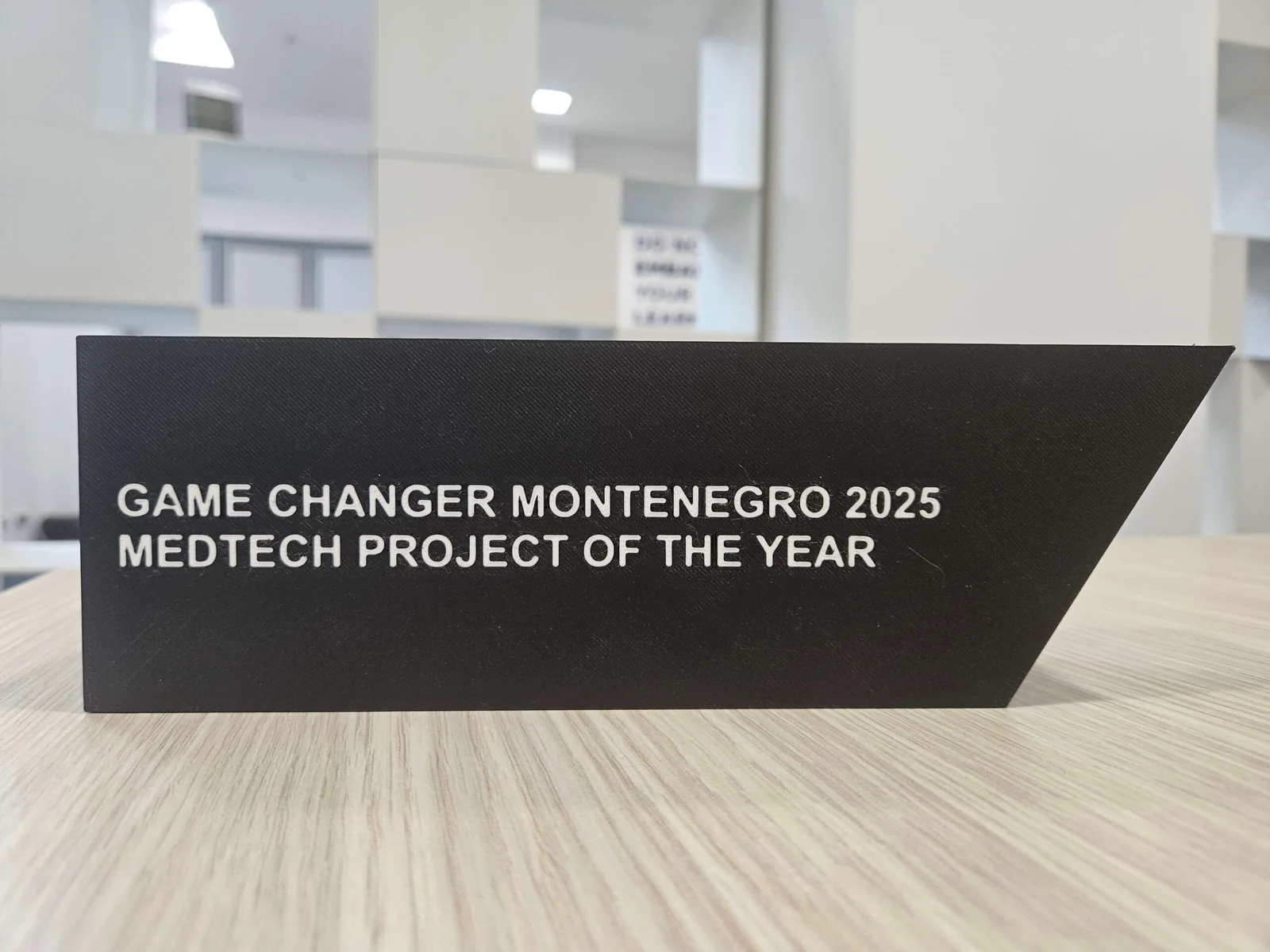
PathAI is an AI-assisted digital pathology research platform developed by ITAS with the Clinical Center of Montenegro, with support from the Innovation Fund of Montenegro. It brings whole-slide images, quantitative analysis and expert review into one workflow for colorectal adenocarcinoma.
Three connected AI capabilities
- Tumour-region detection proposes suspicious regions for closer inspection.
- Multiclass tissue segmentation separates tumour glands, tumour stroma, normal glands and normal stroma.
- Nucleus-instance analysis identifies individual nuclei and supports morphological measurements.
The platform combines these outputs with analytics such as tumour–stroma ratio. Pathologists can inspect overlays, correct findings and accept or reject AI suggestions in an interactive whole-slide viewer.
Expert review throughout development
ITAS developed and integrated the software and AI components. KCCG contributed tissue selection, annotations, clinical expertise and operational evaluation. Difficult cases and inconsistent annotations informed further data curation and model development.
The application connects case upload, image navigation, analysis, prioritisation, review and reporting. A controlled second-opinion workflow supports expert collaboration; it is a platform capability, rather than evidence of an established multi-institutional clinical service.
Final operational evaluation
Following technical verification, the prototype received a positive final operational assessment at KCCG on 31 August 2026. The consolidated assessment was signed by three participating pathologists. They highlighted tumour-region detection, quantitative analysis and the ability to inspect and correct AI outputs.
Recommendations included further refinement in heterogeneous tumour regions, interface improvements and validation on a larger and more diverse case set.
What comes next?
Further work includes broader clinical and scanner cohorts, prospective time-and-workflow studies, independent clinical validation and institutional integration. Diagnostic performance and time savings need to be measured for the intended clinical use; the completed operational evaluation is not a substitute for those studies.
PathAI remains a research prototype. Pathologists retain responsibility for interpretation and decisions, while the platform provides structured information and tools for their review.